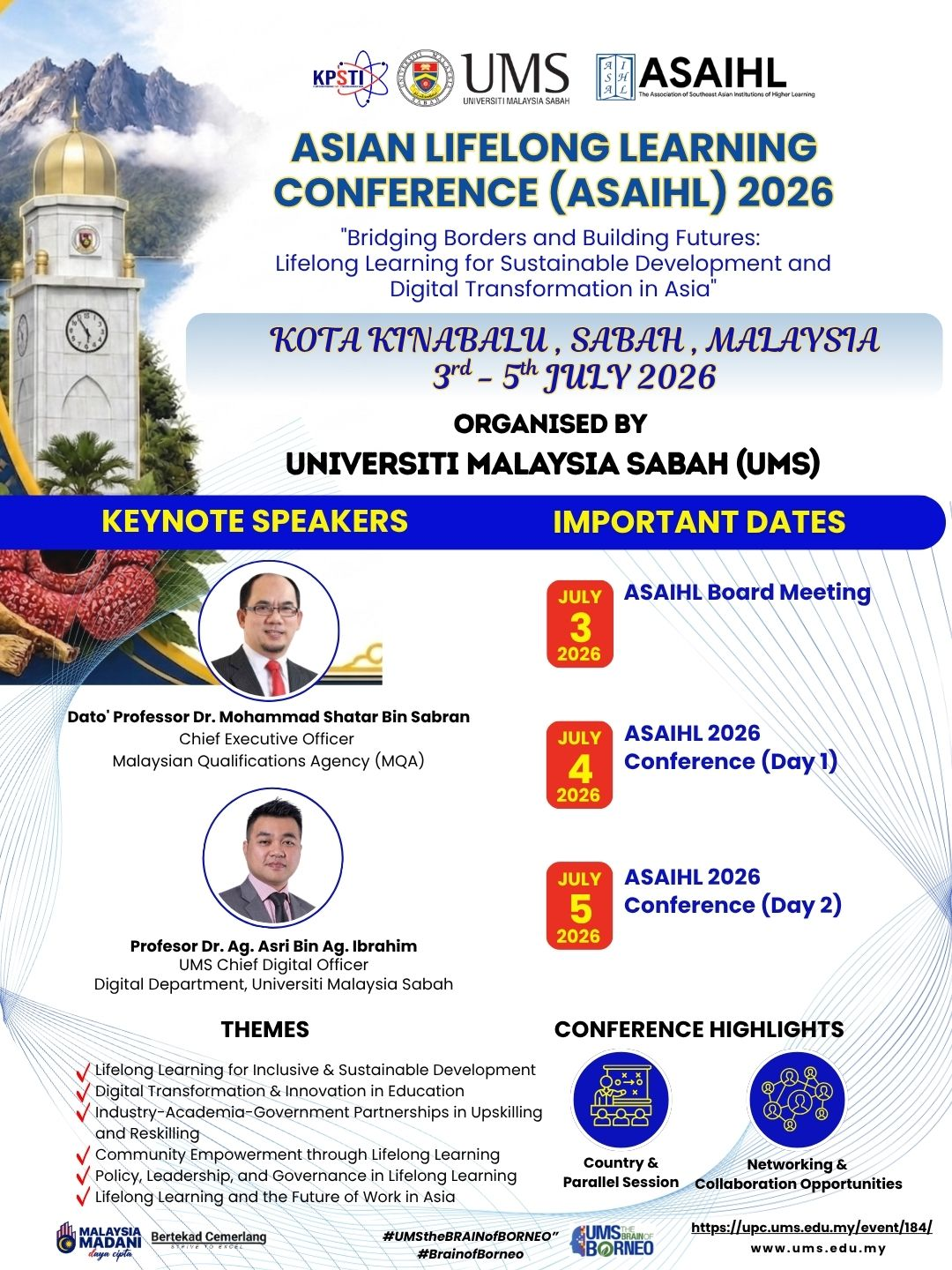
Speaker
Description
Augmented reality (AR) technology superimposes electronically generated virtual data onto the physical world, creating an enhanced learning environment that has gained increasing implementation in medical education. Despite its growing adoption, the impact of AR on learning motivation among preclinical medical students remains inadequately explored. This pretest-posttest study investigated how the AR mobile application affected learning motivation among Year 2 medical students at the Faculty of Medicine and Health Sciences, Universiti Putra Malaysia during the 2022/2023 session. Using simple random sampling, selected participants completed questionnaires adapted from the Instructional Materials Motivation Survey (IMMS) based on the ARCS model (Attention, Relevance, Confidence, Satisfaction), comprising 36 questions administered before and after application exposure. Data analysis employed paired t-tests and Wilcoxon Signed Rank tests to evaluate changes in motivation components. Results demonstrated significant improvements across all ARCS components and overall learning motivation following AR application use. Attention, confidence, satisfaction, and learning motivation showed highly significant increases (p < 0.001), while relevance also demonstrated significant improvement (p = 0.002). These findings indicate that the AR mobile application substantially enhanced learning motivation among medical students at UPM, suggesting AR technology's potential as an effective educational tool in medical curricula. However, additional comprehensive studies and meta-analyses are warranted to thoroughly evaluate AR's multifaceted aspects and inform evidence-based integration into existing medical education frameworks, ensuring optimal implementation strategies that maximize student engagement and learning outcomes.
Keyword: augmented reality, attention, confidence, satisfaction, learning motivation