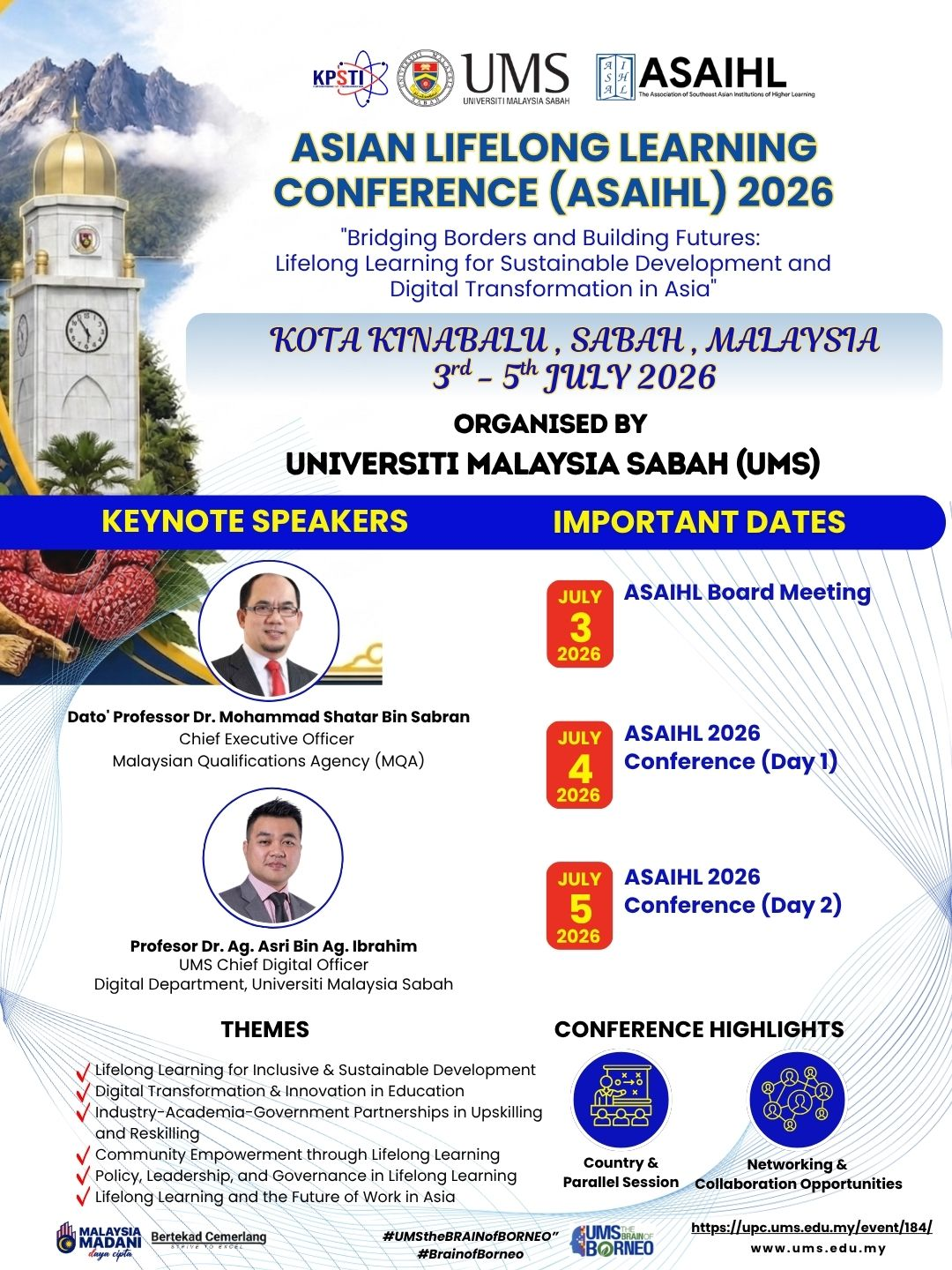
Speaker
Description
Higher education systems across Asia continue to face a persistent disconnect between policy aspirations for lifelong learning and their effective institutional implementation, resulting in fragmented innovations that fail to achieve systemic impact. This paper addresses this gap by proposing a policy-to-practice framework that positions curriculum transformation as the central mechanism for advancing values-driven lifelong learning systems. Drawing on national higher education reform initiatives and institutional implementation experiences, the framework integrates values-based education, education for sustainable development, and flexible learning pathways into a coherent system aligned with governance structures, curriculum architecture, pedagogical innovation, and holistic assessment. The study operationalises key dimensions of lifelong learning are adaptability, inclusivity, and relevance, through scalable curriculum models and cross-sector engagement, supported by strategic leadership and institutional capacity development. Empirical insights from curriculum redesign initiatives, academic development programmes, and system-level transformation efforts demonstrate how alignment between policy intent and academic practice can be achieved. This paper contributes to the field by offering a transferable, policy-aligned framework that moves beyond isolated innovation towards systemic transformation. The findings demonstrate that effective governance, strategic leadership, and the institutionalisation of values-driven competencies are central to developing graduates who embody key Education for Sustainable Development (ESD) competencies and are capable of advancing sustainable development goals within complex and rapidly evolving systems.
Keywords: Lifelong learning; Higher education systems; Curriculum transformation; Values-based education; Governance