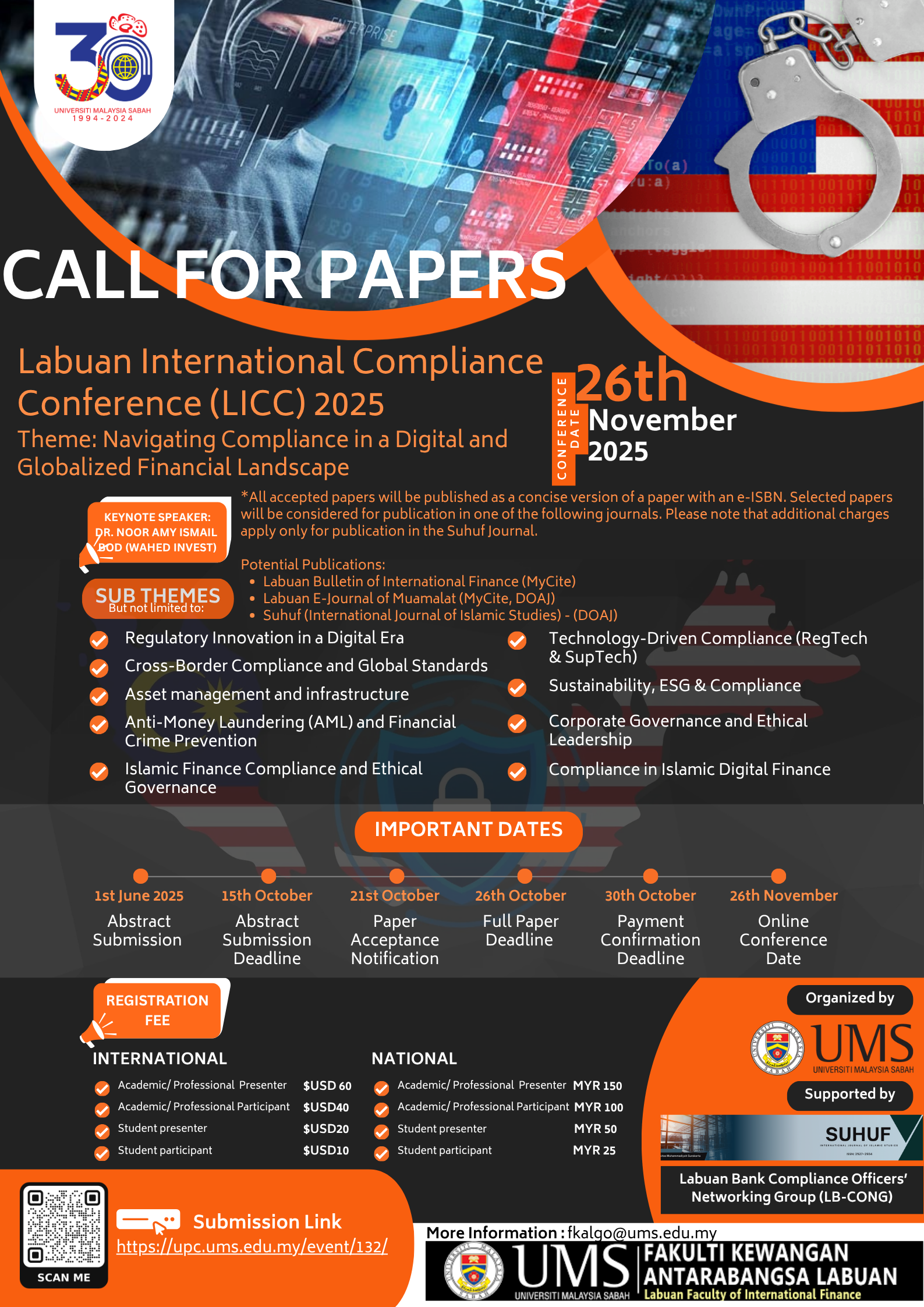
Speaker
Description
Money laundering and financial crimes are a serious threat to global economic stability and security, which require a strong anti-money laundering (AML) regime at a national level. This paper assesses the effectiveness of international AML framework, with particular reference to the FATF standards and includes an assessment of Malaysia's implementation of the Anti-Money Laundering and Anti-Terrorism Financing Act 2001 (AMLATFA) in comparison to the FATF Standards. While Malaysia is making significant strides in aligning its AML regime with international norms, there are still challenges in legal authority, evidential thresholds for civil forfeiture, and the operational capacity of authorities. This study suggests the need for approaches that are suited to a jurisdiction's socio-economic context. It also recommends the need for increased inter-agency cooperation, legislative reform, and use of technology. The findings also have significant implications for enhancing Malaysia's current AML and preventive measures, and contribute towards the wider discussion of addressing effective prevention of financial crime in a rapidly evolving global context.